Weekly Picks

Back Alley Tales

Deltarune 2023

Five Nights in Anime 4

Back Alley Tales Mobile

Fran Bow Chapter 4

Back Alley Tales 2

Sally Face 3

OMORI Horror

Back Alley Tales Mod


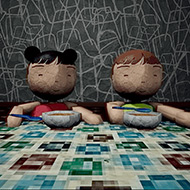
You push a door open that feels heavier than it should, and the hallway light flickers twice before settling into a dim, sickly half-glow. Family Secrets 1: Empty Plate drops you into a house that looks lived-in but sounds empty. No map, no waypoint marker — just low light and the sense the layout hasn’t finished explaining itself.
The core loop is plain: you walk from room to room, nudge open doors, and look at what’s been left behind. Cabinets, place settings, a dining table set for more people than seem to actually live there. Nothing chases you through the opening stretch, and that absence is the point — the tension comes from not knowing whether the next doorway holds something sudden or just another quiet room with a dripping tap.
Early mistakes are almost always about pace. New players sprint through hallways and blow past objects placed deliberately in their path, then wonder why the ending feels abrupt. Doors that stick need a second push, and dim rooms are worth standing in before moving on, since the low-poly, PS1-style rendering does its unsettling work through texture warp and light bloom, not jump scares.
Lighting works as the house’s warning sign — a flickering bulb marks a room worth lingering in. Sound design carries the rest of the dread: old floorboards, a fridge compressor cycling on, a door behind you that you were fairly sure you’d shut. Draw distance, kept short and grainy on purpose, means you’re never sure what’s at the end of a hallway until you’re standing in it.
A full run isn’t long by horror standards, and plenty finish in one sitting, feeling like they’d barely settled into the premise before it ended. That’s the honest trade-off of a house-exploration format this compact: no sprawling map, no second act, just one dense pass through a handful of rooms where every object is doing quiet work.
What keeps people replaying is checking whether they missed something the first time — a drawer left shut, a room entered from a different angle, a detail that only registers on a second look. Whether that’s worth returning to depends on whether you want a long campaign or twenty tense minutes with nothing wasted.
Family Secrets 1: Empty Plate is a short, dim, low-poly walk through somebody else’s house, built around making you notice the untouched place setting at the head of the table before deciding a room has nothing left to say.