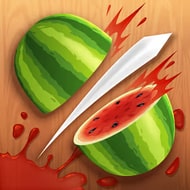
You line up three fruits mid-air, swipe once, and watch the combo counter jump before the pieces even hit the ground. That single motion is the entire appeal of Fruit Ninja, a game built around a blade that never stops moving as long as you keep feeding it targets.
| Genre |
Arcade slicing |
| Core Mechanic |
Swipe-based blade tracking |
| Main Modes |
Classic, Arcade, Zen |
| Player Focus |
Combo building, high-score chasing |
Building the Combo Chain Instead of Random Swiping
New players treat the blade like a mouse cursor, dragging it back and forth across the screen without watching where the fruit actually clusters. Fruit Ninja rewards patience more than speed. The combo chain only registers when multiple pieces are sliced in a single continuous stroke, which means timing your swipe for the moment three or four fruits overlap in the same vertical band matters more than reacting the instant something appears.
Watermelon, pineapple, and coconut fall slower than kiwi or apple because of their size, so a swipe that catches all of them together usually means waiting a half-second longer than instinct suggests. Early in the game this feels counterintuitive, since the screen fills up and every new player wants to clear it immediately.
By the time you reach higher throw density in Classic mode, the pattern becomes clear: fewer swipes, bigger combos, and a much higher score than someone who slices everything on sight.
Bombs and the Cost of a Careless Swipe
The black bombs with a lit fuse are the single biggest cause of restarted runs. In Classic mode, one bomb ends the session outright, which punishes exactly the aggressive swiping style that beginners default to. The trick players learn is to treat the bomb like a stationary obstacle rather than something to dodge mid-swing, since the blade will register a hit on anything it crosses regardless of intent.
- Slowing your swipe near a bomb-heavy cluster instead of slicing through it
- Watching the fuse spark, which telegraphs position slightly before the bomb becomes dangerous
- Letting a bomb fall off-screen rather than forcing a risky combo around it
Arcade mode is more forgiving since a bomb there simply subtracts points instead of ending the run, which is exactly why many players use it to practice reading bomb placement before returning to Classic.
Classic Mode Versus Arcade Mode Under Pressure
Classic mode is about survival: three missed fruits or a single bomb, and the run is over. Arcade mode flips the pressure into a sixty-second countdown where every second matters more than any individual mistake. Fruit Ninja plays noticeably differently across these two modes, and players who only practice one tend to struggle when they switch.
Arcade also introduces special fruit throws unique to its timer format, including bonus rounds where a burst of fruit appears specifically to be juiced for a large one-swipe multiplier. Reading when these bursts are coming, rather than reacting after they’ve already started falling, separates players comfortable with Arcade from those still treating it like Classic with a clock attached.
Zen mode removes bombs entirely and simply lets you chase a personal best over a fixed window, which many players use purely to practice combo timing without the fear of losing a run.
Frenzy, Freeze, and Reading a Power-Up Window
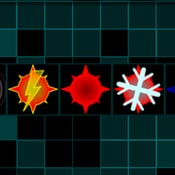
Frenzy dramatically increases fruit density for a short burst, and Freeze slows everything down to give you room to line up a bigger combo than normal reaction speed would allow. Both power-ups appear as a special fruit type that must be sliced to activate, which means missing the power-up fruit itself wastes the entire window before it starts.
The mistake most players make once Frenzy triggers is panicking and swiping faster, when the correct response is almost the opposite: use the extra density to land fewer, larger combos rather than many small ones. Double Score works the same way — it multiplies whatever you slice next, so triggering it right before a dense cluster is far more valuable than slicing it in isolation.
Bananarama and the Fruit Ninja Debate Over Random Bonus Rounds
Bananarama is the rare event where every fruit on screen briefly turns into a banana worth bonus points, and it’s one of the most talked-about mechanics in Fruit Ninja communities precisely because its timing feels inconsistent. Some players consider it a fair random bonus that rewards long sessions; others argue it should trigger on a predictable threshold rather than appearing to be pure chance. That disagreement has never really been resolved, and it’s part of why long “juice runs” — sessions built around chasing one continuous high-value combo streak — remain a recurring topic whenever players compare scores.
Dojo Progression and Why Blade Skins Matter to Long-Term Players
The Dojo is where slicing performance converts into cosmetic progress: new blade trails and backgrounds unlock as combo milestones are hit. None of this changes scoring, but it gives long-session players a reason to keep grinding Classic mode well past the point where score alone would motivate them.
Competitive players chase leaderboard placement and study exact combo thresholds; casual players tend to stick to Zen mode for short, low-pressure sessions; collection-focused players spend most of their time simply trying to unlock every blade skin, which loops back into playing modes they might otherwise skip.
How does the combo counter actually work in Fruit Ninja?
The counter tracks fruit sliced within a single continuous swipe motion, not fruit sliced within a time window. Slicing four fruits across two separate swipes counts as two smaller combos rather than one large one, which is why timing a swipe to catch a cluster matters more than swipe speed.
What happens if you hit a bomb in Arcade mode?
Unlike Classic mode, hitting a bomb in Arcade mode does not end the run immediately. Instead it deducts points from your running total, which is why practicing bomb-heavy screens in Arcade is a common way to prepare for the stricter one-hit rules of Classic.
How long does a Zen mode session last?
Zen mode runs for a fixed, bomb-free window built purely for combo practice and score chasing without the failure conditions found in Classic or Arcade, which is why many players treat it as a warm-up rather than a mode played for its own leaderboard.
Fruit Ninja has stayed relevant precisely because none of its systems reward carelessness — not the bombs, not Bananarama, not the Dojo’s slow unlock pace. Every long combo chain is the product of reading fruit density correctly before the blade ever moves, and that’s the skill the game keeps testing no matter which mode you’re in.