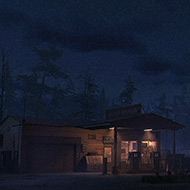
Mournwood is never named out loud anywhere in Fears To Fathom — no sign on the gate, no title card, nothing on the loading screen beyond a plain black rectangle. You know within the first minute of walking the driveway that whoever lived here left in a hurry and didn’t want anyone finding out why.
Reading Mournwood Room by Room in Fears To Fathom
The whole experience of Fears To Fathom plays out inside one property, walked at a slow, deliberate first-person pace that never lets you sprint past a room before you’ve actually looked at it. Doors stick a little before they open. Light switches don’t always work on the first flick. None of this gets explained in a tutorial prompt — the game expects you to notice the house behaving wrong before anything jumps out at you, and that expectation is the whole point.
Early on you’re mostly cataloguing rather than reacting: a kitchen that hasn’t been used in a while, a hallway with one photo missing from an otherwise full row of frames, a staircase that creaks louder going up than it did coming down. Nothing here is flashy. Fears To Fathom is patient in a way a lot of horror games aren’t, and that patience is exactly what a lot of players either settle into or bounce off within the first ten minutes.
Speedrunners and first-timers end up with wildly different playtimes through the same rooms, since the pacing rewards actually stopping to look rather than clearing checkpoints.
What the Silence in Fears To Fathom Is Actually Hiding
The most divisive thing players bring up afterward is how little the game tells you directly. There’s no health bar, no objective marker floating over the next thing to touch, and no music sting warning a scare is close — just ambient noise that goes very slightly wrong before it goes obviously wrong. That’s a fair criticism people raise: without a clearer signal, some players feel like they’re wandering rather than progressing, especially once the upstairs hallway starts repeating similar-looking doors.
Environmental storytelling: telling players what happened through objects left in place rather than through dialogue or text — a chair pulled out at an odd angle, a door left ajar that should be shut — is basically the entire toolkit Fears To Fathom relies on, and it either lands for a given player or it doesn’t.
Once the house’s wrongness stops being subtle, the back half moves noticeably faster, and that shift is the one moment almost every player brings up afterward, cautious explorers and horror veterans alike.
Fears To Fathom doesn’t hand you a clean resolution once you’re through Mournwood — it ends the way it started, without explaining itself, leaving that unfinished, slightly-wrong feeling as the last thing the game gives you instead of a tidy answer.