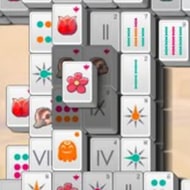
Duck Pond Mahjong looks like a soft, cottagecore matching game built for a slow afternoon, but the three-minute timer sitting at the top of the screen plays a much harsher game than the pastel tile art suggests. What starts as a calm hunt for matching duck and flower tiles quickly turns into a race against a clock that does not care how relaxed the artwork looks.
| Genre |
Mahjong solitaire |
| Platforms |
Browser and mobile |
| Layouts |
24 board formations |
| Goal |
Clear each board by matching identical tile pairs |
| Core mechanic |
Matching accessible tiles before the timer runs out |
Matching Rules Behind Duck Pond Mahjong
The core rule in Duck Pond Mahjong is simple to explain but harder to execute under pressure: only tiles with a free side, and nothing stacked on top of them, can be matched. Duck tiles, flower tiles, acorn tiles, and egg tiles all need an identical partner that is currently accessible, which means a tile buried under two layers of stacking is effectively locked until the tiles above it are cleared.
New players often try to match every visible pair the instant they spot it, without checking whether doing so traps a harder-to-reach tile underneath. That habit is what most commonly ends a run with unmatched tiles still sitting on the board when the timer hits zero.
Because all 24 layouts are unlocked from the start rather than gated behind progress, players tend to jump between formations depending on which shape they find easiest that day, which keeps the game from feeling like a strict linear grind.
Reading a Layout Before the Timer Starts
Regular players of Duck Pond Mahjong rarely start clicking immediately. Scanning the board first to spot which duck tiles or acorn tiles sit isolated near the edges, versus which ones are stacked two or three layers deep, is what separates a clean clear from a board that stalls out halfway through. Once you know where the bottleneck tiles are, the rest of the match order tends to fall into place naturally.
Three minutes sounds generous until a board turns out to have several tiles buried under identical stacks, at which point every wasted second scanning becomes a second you cannot spend clearing pairs.
Why the Timer Changes Everything
Strip away the three-minute clock and Duck Pond Mahjong becomes a purely relaxing puzzle. With it running, the same board turns tense, and this is the aspect players discuss most often in reviews and comments — some find the timer a needless source of stress on an otherwise calm game, while others consider it the entire point, arguing that a clock-free version would feel aimless. Both opinions show up constantly, and neither side is really wrong.
Difficulty does not come from new mechanics as you progress through the 24 layouts, since the matching rules never change. It comes entirely from denser stacking and less obvious tile placement in the harder formations, which forces faster reads without any extra tools to help you.
Beating Your Own Clear Time
Because every layout stays available from the start, most of the long-term appeal in Duck Pond Mahjong comes from replaying a formation to beat a previous clear time rather than unlocking new content. Score-focused players treat each of the 24 boards as its own personal best to chase, while more relaxed players tend to stick to a handful of favorite duck-and-flower layouts and rarely touch the rest.
Speed comes almost entirely from reducing hesitation between matches, not from any special trick, so watching your own early clears back tends to reveal more wasted seconds than most players expect.
What ties Duck Pond Mahjong together, once you get past the calm surface, is that timer forcing every decision to matter a little more than it would in a standard untimed mahjong board. Clearing a stubborn stack of egg tiles with two seconds left on the clock is the kind of small, specific win that keeps players coming back to formations they have already cleared a dozen times before.