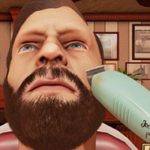
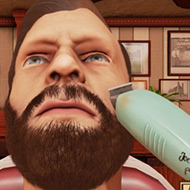
A client drops into the chair without a word, taps a photo on their phone, and just waits. That’s the pitch of Barbershop Simulator: a razor, a set of clippers, and a stranger’s patience ticking down while you figure out whether the requested haircut is something your hands can pull off.
| Genre |
Simulation, slapstick comedy |
| Setting |
One barbershop chair, one client at a time |
| Core Tools |
Razor, clippers, scissors, comb, shaving cream |
| Objective |
Match each client’s reference photo before patience runs out |
| Controls |
Mouse-driven tool strokes, first-person view |
| Notable Reception |
578+ itch.io comments, millions of YouTube views |
The Razor-First Reality of Barbershop Simulator
Most people expect a hairdressing sim built around trimming and layering. What they get leans hard into shaving instead, the loop revolving around a straight razor and shaving cream rather than the clippers and scissors also on hand.
The confusion shows up constantly in the comment section, where the recurring question is simply “how do you shave?” Once that clicks, the game stops feeling like a hairstyling sandbox and starts feeling like a precision-shaving puzzle with a chair bolted to the floor.
Reading a Client Before You Touch the Clippers
Every client arrives with a reference photo, and the game expects real study rather than a guess, since hairline position and cream placement both come from that single image.
- Zoom in on the reference photo first
- Match the hairline and facial hair shape
- Apply shaving cream before the razor
- Save comb-outs for the last pass
A third type of player skips the photo entirely, treating every client as a chance to see how much damage one careless stroke can do.
Shaving Cream, Timing, and the Satisfaction Math
Client satisfaction runs on more than the final look. Waiting too long before the razor touches skin sours a client’s mood, and skipping cream before a razor pass makes the exchange rougher, none of it spelled out on a menu screen.
Good sessions build toward tips, while perfectionists replay a bad client rather than move on, and others treat a stormed-off client as a punchline.
Why the Chaplin Moustache Request Trips Up Newcomers
By the time a reference photo calls for the small toothbrush-style moustache players nicknamed the Chaplin moustache, broad razor strokes stop working. Landing it clean needs narrow, steady movements instead of the strokes that suit a full beard.
It’s also where a real limitation shows: several requested looks are genuinely hard to reproduce, and it’s a common complaint that some styles feel almost impossible to match no matter how careful the work is.
The Injury System Nobody Warns You About
Move too fast or hold an edge wrong and a client gets nicked, and the game does not softly ignore it. Careless clipper or razor use draws blood and the client reacts, flipping the tone from mundane grooming to slapstick disaster in about a second, a big reason it found a second life on YouTube.
Chasing that reaction on purpose has become an unofficial side game for some players, while everyone else treats it as a constant low-level risk under an otherwise routine shave.
Reputation, Tips, and Repeat Clients
A clean shave that matches the photo and respects a client’s patience earns better tips and, over time, a reputation that keeps clients returning. Botch enough sessions and clients grow shorter-tempered, quicker to storm off mid-shave.
Two player types split around this loop. One chases every tip and treats a happy client reaction as the actual goal, while the other barely tracks score, more interested in what happens when a moustache request goes hilariously wrong. Both are viable, since nothing gates content behind a minimum reputation.
Barbershop Simulator’s Rough Edges Behind the Big Numbers
It’s worth saying plainly that the mechanical depth here is thinner than the view counts suggest. A handful of tools, one client at a time, a satisfaction score you can’t fully see, and a settings menu whose sliders plenty of players report doing nothing at all, are honest limits of a small-scale project.
What keeps people coming back anyway is how unpredictable a single razor stroke can be, turning a routine grooming task into something worth clipping and sharing.
- How do you actually shave a client in Barbershop Simulator? Apply shaving cream first, then use slow, controlled razor strokes following the reference photo instead of rushing across in one motion. Skipping the cream step is the most common reason a shave feels rougher than it should.
- Why can’t you cut hair length in Barbershop Simulator the way you’d expect? The tools lean toward razor work and facial hair shaping over full-length cutting. Clippers and scissors handle touch-ups, but the core interaction stays shaving-focused.
- How does the tip and satisfaction system work in Barbershop Simulator? Satisfaction tracks how long a client waits and whether shaving cream is used before the razor touches skin, with better outcomes leading to bigger tips and repeat clients. The scoring isn’t shown on screen, so most players learn the pattern through repetition.
Between the reference-photo guesswork, the risk of a razor nick, and a Chaplin moustache request that never comes out as clean as the photo promises, Barbershop Simulator earns its chaotic reputation one client at a time. It’s rough in the ways its own comment section keeps pointing out, and somehow that’s why the chair never stays empty for long.