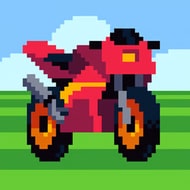
You climb into a car with no roof, knowing full well that leaves your driver’s head as the single most exposed target in the entire arena, and somehow that is still the least strange part of Battle Wheels. Every match plays out as a physics-driven scramble to flip your own vehicle onto your opponent’s exposed head before they manage to do the same to you.
| Genre |
Physics-based vehicular combat |
| Platforms |
Browser and mobile |
| Modes |
Single-player career and local two-player |
| Goal |
Deplete your opponent’s health bar to zero |
| Core mechanic |
Flipping your roofless car onto the opponent’s head |
Why Roofless Cars Define Battle Wheels
The absence of a roof is not a cosmetic quirk in Battle Wheels — it is the entire combat system. Every car exposes its driver’s head, which means the fastest way to win a round is landing your chassis or wheels directly on top of that exposed spot rather than simply ramming an opponent head-on the way a normal driving game would encourage.
This single design choice reshapes how every match plays out, since positioning above an opponent matters more than raw speed across the arena floor.
Players coming from typical racing or demolition games often need a few rounds to unlearn the instinct to just crash forward, since a flat collision in Battle Wheels usually does far less than a well-timed flip onto the head.
Mastering Flips and Aerial Positioning
Momentum is everything once a round leaves the ground. Small taps on the movement keys build rotation gradually, letting a skilled player rock a car back and forth before launching into a controlled flip rather than a wild, uncontrolled tumble. Overcorrecting is the single biggest reason a flip attempt fails, sending the car crashing down at the wrong angle instead of landing squarely where it needs to.
Ramps scattered around several arenas add extra height to a flip attempt, and players who learn to route through them consistently land more head strikes than players who try to flip from flat ground alone.
Chassis, Wheels, and What to Upgrade First
Coins earned from matches go toward three main upgrade paths: chassis health, wheel damage, and general power boosts. New players in Battle Wheels often spread coins evenly across all three, which slows progress compared to committing early to one path. Wheel damage upgrades tend to shorten fights the fastest, while chassis health upgrades matter more against opponents who have already invested heavily in damage.
There is no single correct build here — a damage-focused car wins fast but folds quickly under pressure, while a health-focused build survives longer but takes noticeably more hits to close out a round.
Arena Layout and Hazard Awareness
Different arenas in Battle Wheels introduce ramps, tight corners, and the occasional environmental hazard that can work for or against either driver depending on positioning. Players who ignore the arena entirely and focus purely on their opponent tend to get caught off guard by terrain that either boosts or interrupts a flip mid-air.
Single-Player Career Versus Local Two-Player
The career mode ramps up AI difficulty steadily, giving new players a controlled space to practice flip timing before facing genuinely aggressive opponents. Local two-player mode strips that structure away entirely, and matches against a real opponent tend to move faster and punish hesitation far more harshly than the AI ever does, since a human opponent will exploit an overcommitted flip immediately.
Common Mistakes New Players Make
Overcommitting to a flip too early, before enough momentum has built up, leaves a car exposed mid-air with no way to correct course. Chasing an opponent in a straight line rather than baiting them into a bad flip is another habit that costs rounds, since Battle Wheels rewards patience over pure aggression more often than it first appears.
How do you actually deal damage in Battle Wheels?
Damage comes from landing your car’s chassis or wheels directly on your opponent’s exposed head, not from standard collisions, so successful flips matter far more than raw ramming speed.
Does Battle Wheels have a two-player mode?
Yes, a local two-player mode lets two people compete on the same device, using separate key sets for each driver, alongside the single-player career mode against AI opponents.
What should you upgrade first in Battle Wheels?
Most experienced players commit early to either wheel damage for faster wins or chassis health for survivability, rather than spreading coins evenly across every upgrade path.
Battle Wheels turns a genuinely silly premise — roofless cars fighting by headbutting each other from the air — into a surprisingly deep test of momentum control, and once flipping stops feeling accidental and starts feeling deliberate, every arena becomes a puzzle about where your wheels need to land next.